
Welcome. Planning travel for photographic or vlogging purposes requires an inordinate amount of planning. What should be simple can become complex, even dangerous, very quickly if you haven’t considered the implications of what you need, versus want, and what you can accommodate versus think you can take with you. First, you’ll have to answer six questions, all of which are not as obvious as you’d expect.
Where are you going? Who are you going with? What are you taking with you? Why are you taking it? When are you going on your trip? How are you going to do”X”?
This blog subject will be broken down into its constituent parts, as one could almost, in fact, write a book on the subject. Therefore, I’ll be creating a series of blogs to address what I see as the key issues associated with photographic travel plans, blogging, vlogging, and location destinations. I’ll be addressing the answers to the questions I posit based on traveling by motorcycle. This will in no way make the concerns less valid for anyone in a protective vehicle and should ultimately still focus one’s thoughts on the intended mode of travel to where you intend to go.
One of the biggest considerations for motorcycle vlogging content creators is their ‘kit’. There is not one single answer that applies to all of us. Let’s face it, we all don’t have the same resources, start from the same locations, or intend on going to the same destinations. Each of these decisions poses a list of questions that we all must answer before starting the journey. I’ve divided this post into headings that one should consider and address before creating your travel kit. They follow but are in no sequential order of importance.
Where are you going?
One of your first considerations must be, where are you going? In other words, what time of year, weather, road, and accommodation types are you expecting to use or employ? Are you camping or staying in motels? Will there even be motels where you’re going? Will I have the power to charge or use my devices, phone, or camera? Where will I eat? What will and should I eat? Are there showers, toilets, and places to buy the essentials that I cannot carry? And if there isn’t, what’s my plan? Will I have connectivity for my phone? Will I have enough fuel and supplies? What if I encounter an emergency? Will I be able to make contact if I do, or get to a place of refuge?
In my experience, all these questions must be answered, first, before any foray into the wilds, if that is your plan. I fundamentally had to change my plans on my last motorcycle trip, simply because I didn’t give due consideration to a single factor, that being a massive change in weather from what I had expected. I was on foot, thirty miles from help, without adequate protection from the elements.
You need to consider the possibilities, not just the probabilities, because no plan survives an encounter with the unknown, and therefore the unanticipated.
What are you taking with you?
Once you know where you’re going, when, and for how long, the next question will invariably be, what are you taking with you? This question needs to possess your thoughts during the planning process if you’re going into the wilderness or the outback where services do not exist and where, depending on your destination, wildlife, and emergency assistance may either be encountered or become necessary.
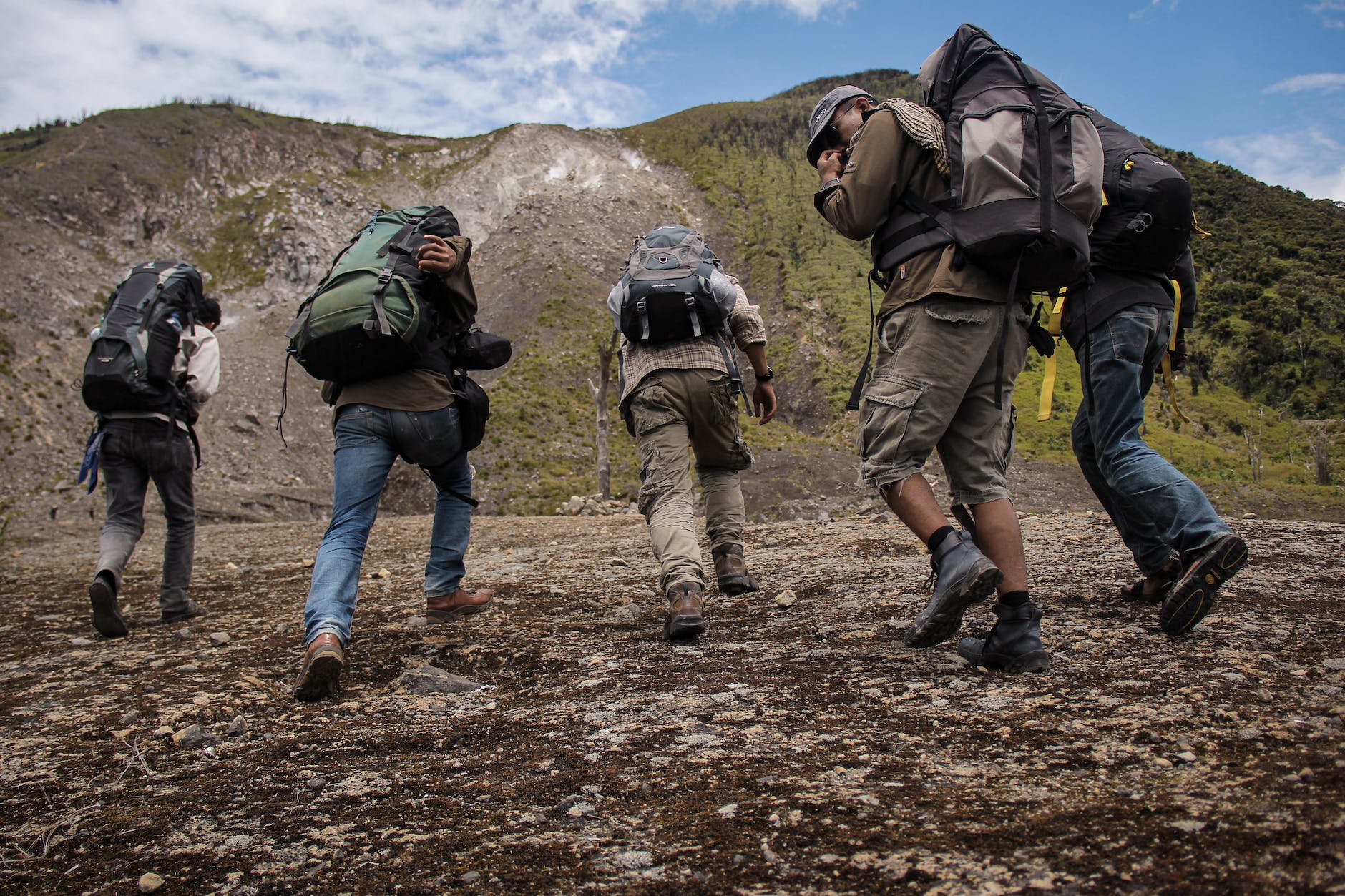
The average soldier or marine, in good shape and with the assistance of a team of others, is expected to carry between 60 and 120 pounds of equipment and gear. When you go into the wilderness, you’ll be carrying your accommodation, food, heat sources, fuel, lamps, sleeping bag, ground blanket, and padding, your clothes, photographic equipment, power sources, communication devices, lighting, first aid kit, and likely an emergency beacon. You’ll need to assemble all of this, with the weight and optimal efficiency of each component considered. Nothing can be ignored or left behind in a situation where you will have no assistance, possibly for days.
I discovered to my eternal dislike, that my ‘kit’, carried in a Himalayan backpack, still weighed over 80 lbs. If your intended destination is higher in altitude, or significantly higher, then you must be serious about considering your level of fitness and general health. If the realistic assessment of your conditioning is that you’re likely to find the destination difficult to attain, then select another destination. Finding yourself 15 or 20 miles into the mountains, stranded, exhausted, or injured, by yourself, is not what I would wish for anyone. As a former rescue instructor, dive rescue instructor, and high-angle rescue instructor, I can tell you unequivocally that you need to anticipate the worst, plan for the worst, and hope for the best.
Next Blog
In the next blog, I’ll address the specifics of planning for your experience. If you’re only going to make short forays into wilderness sites where you’re going to be near assistance, the plan will be substantively
easier, and we’ll look at those considerations. It still requires planning, but fortunately, the demand in terms of resources will be substantively less.
See you in the next blog.
Ciao.
Leave a Reply