
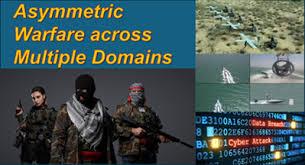
While Canada plans for a competent long-term strategic military that will integrate closely with NATO and Europe, the risk is that the near-term poses the greatest risk to Canadian sovereignty.
In order to bridge the capability gap in the near term, it is essential for Canada’s military to prepare for asymmetric warfare on an unprecedented scale.
It is all well and good to develop highly sophisticated weapons that can combat and succeed in defending territory against equally sophisticated weapons, however the simple fact that an opposing force would be able to overwhelm these systems in short order due to the sheer volume of munitions, missiles, aircraft and ground forces, suggests that less sophisticated but highly capable systems become quickly integrated into Canada’s armed forces, and that Canada undergo a societal change that creates a ‘whole society defence structure’.
Basic Infantry Equipment, Skills Development and Munitions
In order to blunt the ability of a large force from immediately overwhelming a small professional military, it is necessary to expand upon the knowledge that nations that have faced such actions have taken that have been both highly effective and highly cost-effective.
The ability to rapidly train and equip Canada’s supplemental reserve force, is requisite. The only means of providing the necessary personnel to make such a ‘whole society’ defence capable, would be through the training of large numbers of civilians to become trained infantry forces designed specifically to delay and to cost an invader by creating significant losses in both materiel and manpower, such that their action would result in a major deterrent to invasion.
Finland, Sweden, Norway, Ukraine and the Baltic Nations have created highly efficient training systems and basic infantry equipment and training suitable for Canada to employ, without wasting time, energy and money on alternate systems.
Training Centres and the Purchase of Basic Weaponry and Munitions
First, training is of the essence, therefore a rapid increase in competent training personnel, the purchase, manufacture and distribution of a standard infantry weapon, uniforms and ancillary equipment, for communications, reconnaissance and the construction/purchase of anti-aircraft, anti-drone, and anti-missile systems is necessary.
The purchase of 500,000 standard issue infantry weapons is a requisite need for the supplementary reserve and reserve forces. Canadian development and stockpiling of ammunition and high explosives, including incendiary explosive devices is also requisite.
The training, and then protection of personnel in an asymmetric military structure is requisite, therefore developing and employing sophisticated encrypted communications systems capable of burst technology transmission and reception is required.
The protection of personnel, through spectral cloaking and camouflage is necessary. When combined with highly mobile and highly competent officers-road equipment for the transport of troops and equipment specifically designed for wilderness or urban environments, it will allow for movement without easy detection from satellite or loitering reconnoitring airborne systems, such as predator or AWACS.

Drone Development and Autonomous and Semi-Autonomous Drone Technology
Rather than expend large resources on highly sophisticated weapons systems, Ukraine’s success on the battlefield in deploying large numbers of cheap, targetable drones that can be ‘swarmed’ at troop concentrations, convoys or transportation corridors, electrical distribution, rail systems and essential infrastructure, like digital communications and data centres would enable Canada to create force multipliers that greatly diminish the numeric advantage that an invader may well possess.
Systems that are cheap to manufacture, are fuel efficient and utilize the delivery of high explosive ‘shape charges’ for penetration to armoured systems or to structures for the destruction of communications, command and control systems have been successfully employed by Ukraine to destroy major assets like refineries, bridges, electrical installations, nuclear facilities, water supply, etc., throughout Russia, and at significant distances.
Similarly, Canada’s defence systems should employ such competencies. Deploying systems that cost tens of thousands to destroy sophisticated systems that cost millions and in some cases, billions of dollars to develop, mean that asymmetric weapons offer substantive savings that can be sustained in the long-term as necessary.
Canada’s Both Remote and Expansive Landscape, Like Russias is a Significant Defensive Structure in and Of Itself
In order to invade, control and command a population it is necessary to be able to access key nodes and points of distribution. Canada’s sheer size, makes such an operation extremely difficult, particularly as dilution of force becomes readily apparent as more and more territory acquisition requires ever larger forces to control.
Destroying key nodes, or controlling key nodes, both internally and externally that would be used to cache equipment and centralize its deployment means that over massive geographic areas, entirely under civilian control, the opportunity for acts of terrorism becomes extremely likely.
As an invasion force moves it leaves massive areas open to attack behind its forward elements from within, whether those be transportation nodes, airports, rail distribution centres, ports, bridges and key choke points for targeting.
The use of improvised explosive devices across the multitude of transportation opportunities would tie up massive numbers of armed personnel, and/or tie down significant numbers of civilians, such that commerce, manufacturing and productivity would take a massive hit.
The costs for ‘projecting force’ would become so high in terms of both materials and the lives of attackers, that, as Russia is now discovering, invasion and maintaining territorial integrity is highly problematic.
In relation to Russia, 7.3% of Russia’s GDP and more than 40% of its budget is being employed to sustain its war with Ukraine. A figure that makes what is now a long-term strategy, a failure.
Not to mention that while such offensive actions are taking place, the enemies of an invader would not stand still or simply watch such actions take place.
In relation to America, China, India, Turkey and Brazil would all be capable of extracting a price for such actions.
For example, in Russia, the domestic strife and related anger is now becoming so entrenched that Vladimir Putin fears a coup or uprising more than he does defeat on the battlefield in Ukraine.
The Advantages of Asymmetric Warfare and Large, Remote Geography Lies with the Defender
America, even with a massive 2.81 million men and women under arms in the United States, hegemonic control of foreign nations and their populace is unlikely.
And the costs associated with their retention, training, losses and deployment would reach atmospheric levels. Even now, America’s military costs, its debt and its loss of strategic importance and economic clout is waning appreciably.
How much worse would it be if a major ground war were in evidence?
While a nation is consumed with warfare, it will suffer substantively domestically in terms of meeting even the most basic of necessities, such as the provision of food, medical care, housing, transportation and gainful employment.
Something that Americans have a very low tolerance for.
Meanwhile, as it alienates and displaces investment, manufacturing, production and productivity, it loses influence, resources and ultimately control of its population and its power.
A Proven Strategy of Resistance and Success
Sweden, Finland and Norway, now including front-line nations like Poland, Germany and the Baltic States have clearly illustrated that a ‘whole society’ defence is the antidote to a hegemonic or imperial powers aims and ambitions.
Canada harbours no illusions about American intentions or its willingness to employ force.
We have watched America act on its voluminous greed for more than sixty years. First with Vietnam, then the Gulf Wars, then Afghanistan, then Syria, then Gaza and now, Iran.
We suffer no delusions about America and its Project 2025, its avariciousness nature, its pure greed and its willingness to use threats, extortion and coercion as its means of influence.
The days of being allied to a nation that imposes only distrust, lies, greed and threatens to obtain acquiescence or submission, are over.
America is no longer a democracy. It is a fascist rogue state run by a sociopathic autocrat and kleptocrat.
The world, including all of America’s former allies and partners, as well as its enemies, such as China, Iran, North Korea and an increasing number of states opposed to the tyranny of America’s autocracy, such as Brazil, Indonesia, India, Pakistan and the Gulf States, no longer support America’s aims and ambitions.
A new world order is in creation, but this one is opposed to America and its ambitions.
There will be no going back to what was.
Leave a Reply